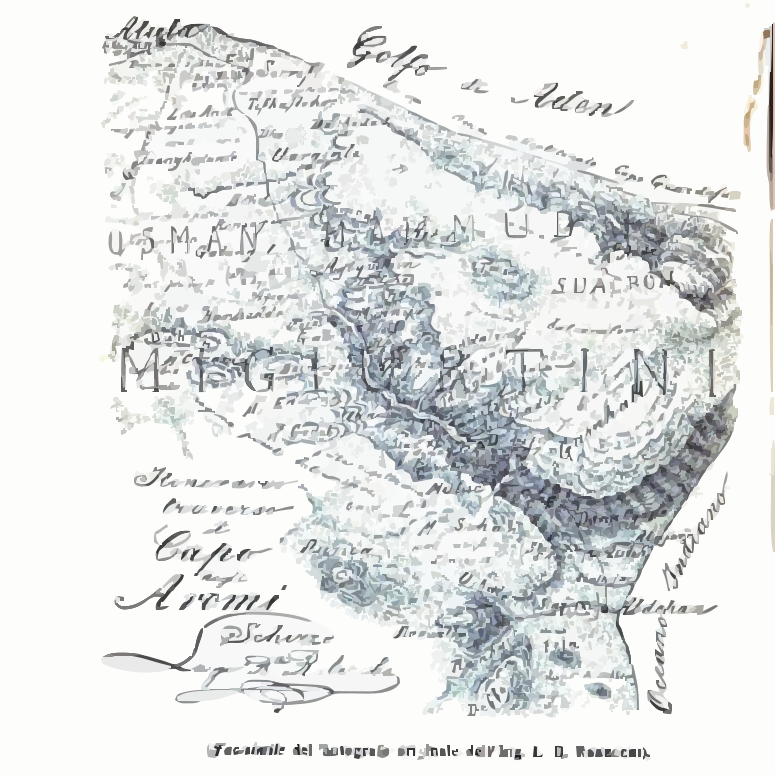
A century after the Colonial Museum was founded, the material legacies of Italian colonialism are still present in Pavia, but they largely pass unnoticed. Some are subtle, like the map of Africa on Robecchi Bricchetti’s tombstone in the city cemetery. But others are substantial: the Civic Museum holds over one thousand photographs from Robecchi Bricchetti’s expeditions, and the deposits of the Kosmos Museum contains hundreds of objects he collected in Africa. Researchers can make an appointment to see them, but they have not been accessible to the public for decades.
One of our aims is to increase awareness of these overlooked histories, and to direct critical attention to this heritage. To do this, we are working on a series of events during our project: from walking tours that reveal Pavia’s colonial past, to workshops that explore the photographic archive in novel and exciting ways. What new meanings will a wider audience give to the traces of early Italian colonialism?
RB 64, headrest
This wooden headrest, known as barshin, barjin, or barkin, was collected in Somalia by Enrico Petrella. Wooden headrests are used across East Africa, especially in nomadic communities.
Many museums containing objects from Somalia have headrests in their collections: including the Somali Museum in Minneapolis, North America’s only museum dedicated to Somali culture, and the Pitt Rivers Museum at the University of Oxford, which holds over half a million items from across the world.
Working with museum archives can shed light on how objects were used in the time and place they were acquired. This photograph shows a man carving a wooden headrest, and this series demonstrates how they are used. They were digitised by the Somali Photo Archive project, which examines photographs taken in East Africa by the English anthropologist Diana Powell-Cotton in the 1930s. Initiatives like this can introduce these archives to a wider public, including source communities. They can also improve the quality of existing archival descriptions, which are sometimes incomplete, inaccurate, or even offensive.
Comments
Leave your comment for the research group here.
- How is colonial history remembered (or forgotten)?
- What role can material culture play in telling stories about the past?
- How can we reimagine archives, museums, and visible traces of difficult histories?