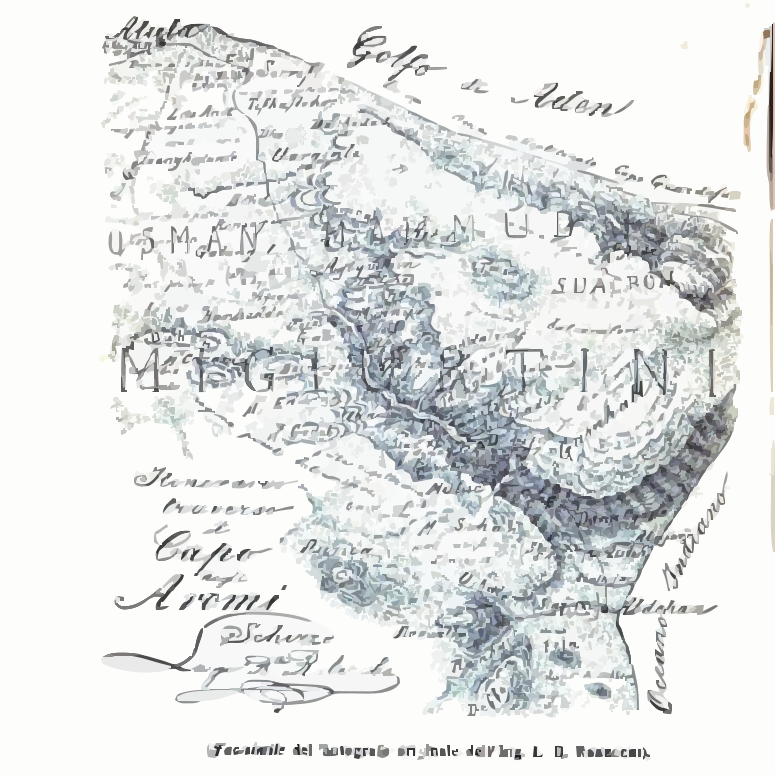
Born in Pavia, Luigi Robecchi Bricchetti explored territories of colonial interest in Egypt, Libya, and the Horn of Africa between 1885 and 1903. He donated most of the materials he collected to his birth city. On Fascist Italy’s inaugural ‘Colonial Day’ (21 April 1926), this collection became the ‘Colonial Section’ of the city museum. Bricchetti died one month later. He was well-known in his time as an intrepid explorer, and was posthumously celebrated as a ‘pioneer of empire’. Since the Second World War, as part of a wider trend of colonial amnesia, his name has fallen into obscurity.
Our research will decentre Bricchetti as a figure, shifting focus to the networks implied in his collections, and examining the role played in his activities by other European agents, and by African intermediaries and communities. We will analyse how early Italian colonialism was promoted through Bricchetti’s activities, but also why this story does not (yet) form part of public memory in Italy or the countries he explored. We will involve people from various communities and countries implicated in Bricchetti’s collecting, to co-create new, more inclusive histories of African-Italian relations.
We will survey, catalogue and part-digitize Bricchetti’s collections in Pavia, and conduct comparative research across the Pavia collections and related collections in Italy, Egypt and Ethiopia. This work will increase the accessibility of the collections; lead to greater scholarly and public understanding of the early stages of the Italian colonial mission in Africa; and connect collections and communities across Italy and the Horn of Africa.
Through archival work in Italy, UK, Egypt and Ethiopia, and research into collections held in Pavia, Cairo, Addis Ababa and Harar, we will ask:
- How did Italy fit into the wider structure and function of colonial networks present in Africa at the time, and what contacts did Italians have with other agents, intermediaries and local communities?
- What were the structural connections between individual explorers and European governments active in Africa at the time?
- What can this case study teach us about explorers’ relations with African societies, and with commercial, scientific and religious European missions present in Africa at the time?
- Can the reception of material collections like Bricchetti’s shed light on how national enthusiasm was conjured for the colonial project?
- What can the lack of public knowledge about Bricchetti tell us about how Italy remembers (or tries to forget) its colonial past, and how Egypt and Ethiopia remember this period?
- How can we use colonial-era collections to promote innovative practices of cultural restitution and critical decolonial thinking in Italy?