Collecting

Like many European travellers, Robecchi Bricchetti collected hundreds of items that formed part of daily life in the places he visited. In 1926, Pavia’s Colonial Museum was opened to the public, and most of that museum was made up of objects that Robecchi Bricchetti donated to his home city. Here, we display some of 3D models of objects from that collection. 

Some European travellers kept detailed records of where, when, and from whom they acquired particular objects. Some even listed what they paid or traded in exchange for them. In contrast, we have limited information about Robecchi Bricchetti’s collection in Pavia. Often, the inventories we have do not even tell us an object’s original use, or where it was acquired. 

We know that Robecchi Bricchetti carried money and valuable goods with him to trade during his travels. We also know that some of the places he visited had markets selling the kinds of objects in his collections. We can see from his writings that he was keen to document commercial activities in the places he visited, and to understand how these could benefit future Italian colonialists.
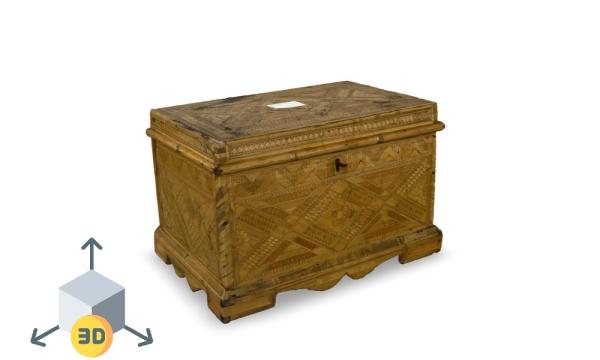
 

RB 92, wooden chest

According to an inventory from the 1990s, this chest was obtained by re-using a wooden box that originally contained bottles of refined petroleum. The same inventory tells us it is “probably [from the] coastal region of Somalia”.

Where we do have information about where an object comes from, Somalia is most often given as the place of origin. As this example shows, however, we cannot always be certain. Robecchi Bricchetti travelled to Somalia between the early 1890s and the early 1900s; a period of growing Italian presence and colonial activity there. While examining these objects, viewers are invited to consider: why (and how) might European explorers have collected objects like these, and what might have influenced their choices?


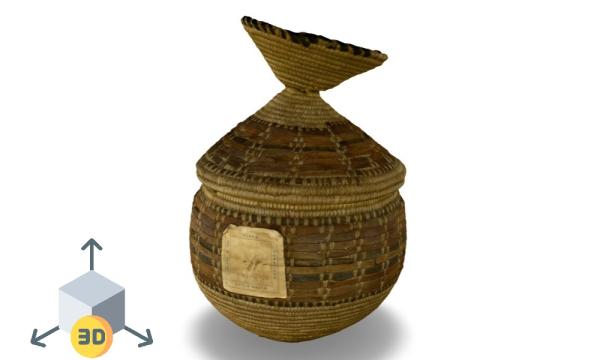
RB 143, woven basket

Somalia has a rich tradition of weaving. A selection of objects donated by members of the Somali community in the UK to Culture House, a Somali-led cultural institution in London, illustrates this well: from this patterned qufad, used for storing dry foods, to this woven platter, used to sift maize.


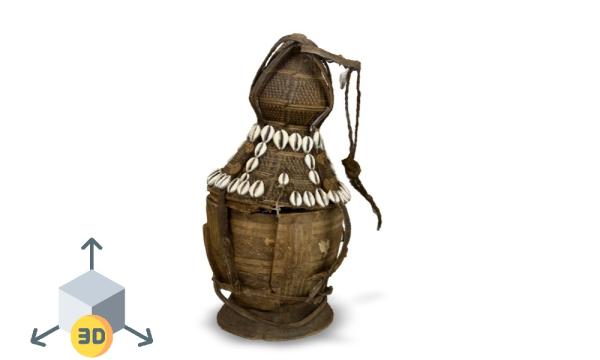
RB 186, dhiil

 A dhiil is a vessel used to carry milk. This example is decorated with cowrie shells, but they vary considerably in shape, style, and purpose. Comparing some of the 3D objects digitised by the Nomad archive illustrates this variety well: they range from this woven dhiil to this wooden version, a similar shape to the one collected by Robecchi Bricchetti.


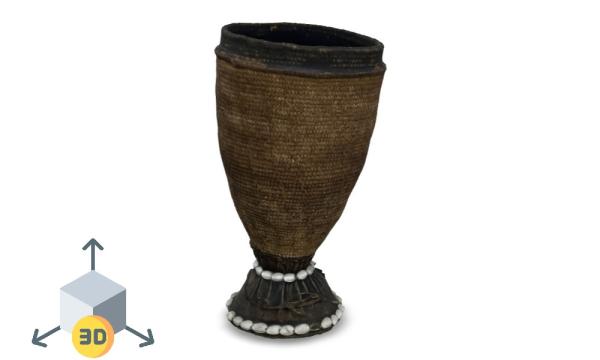
RB 189, fiber cup


< Previous Page: Exploration | Next Page: Afterlives >


Comments

Leave your comment for the research group here. 

  • Have you seen similar objects elsewhere?
  • What do you know about how and where they are used? 
  • How can museums in Europe take care of the African collections they hold?
CAPTCHA
This question is for testing whether or not you are a human visitor and to prevent automated spam submissions.